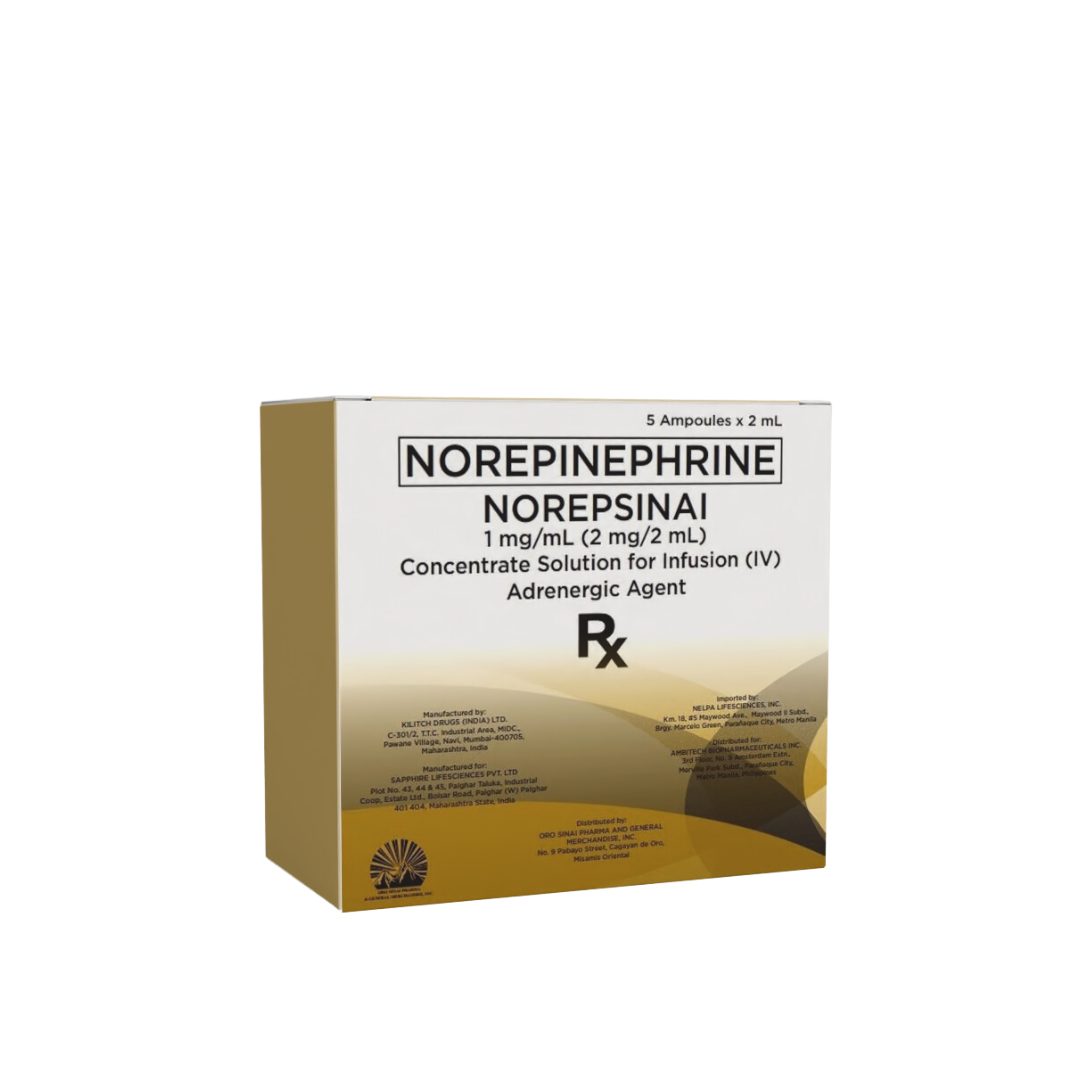
Generic Name: Norepinephrine (norepinephrine bitartrate / noradrenaline).
Strength & Dosage Form: 1 mg/mL concentrate for solution for infusion — ampoule
Therapeutic Class: Vasopressor / Sympathomimetic agent (α-adrenergic > β-adrenergic effects).
Indications (PNDF / clinical use):
For acute hypotensive states and shock when vasopressor support is required, including: septic (vasodilatory) shock after adequate fluid resuscitation, cardiogenic shock (to raise perfusion pressure), neurogenic shock, persistent hypotension after cardiac arrest, and other life-threatening hypotension requiring vasoactive support.
Dosage & Administration:
Adults:
- Typical initial infusion: 8–12 µg/min (many protocols use this starting range and titrate).
- Maintenance range (commonly): 2–4 µg/min, titrate to target MAP (often MAP ≥ 65 mmHg).
- Dosing may also be weight-based in some protocols (e.g., 0.05–0.5 µg/kg/min) and higher doses are used in refractory shock under specialist care.
Children:
- Dosing is specialist-directed; typical pediatric/neonatal dosing is lower and weight-based — follow unit guidelines or product PI.
Important: Titrate rapidly to effect and monitor continuously (invasive arterial BP when possible).
Reconstitution & Infusion Preparation (from 1 mg/mL ampoule):
- Common hospital dilutions / examples:
- Add 4 mL (4 mg) to 250 mL D5W or 0.9% NaCl → final concentration ≈ 16 µg/mL (norepinephrine base) — convenient for infusion rate calculations (this is a commonly used dilution in many protocols).
- Alternative dilutions: 4 mg in 500 mL (≈8 µg/mL) or other concentrations per local protocol/institutional infusion charts.
- Administration: Continuous IV infusion using an infusion pump or syringe pump. Central venous access preferred; if peripheral line used, monitor the site closely for extravasation.
Contraindications:
- Hypotension due to hypovolemia (unless intravascular volume is corrected).
- Known hypersensitivity to norepinephrine or excipients (some formulations contain sulfites).
Precautions:
- Continuous hemodynamic monitoring (arterial BP) is recommended.
- Use caution in patients with coronary artery disease, peripheral vascular disease, hyperthyroidism, or arrhythmias — risk of ischemia/arrhythmia with vasoconstrictors.
- Avoid abrupt cessation (titrate down gradually where possible).
- If extravasation occurs: stop infusion, aspirate drug, and treat per local protocol (e.g., local infiltration with phentolamine if available).
Adverse Reactions:
- Hypertension, reflex bradycardia, tachyarrhythmias, myocardial ischemia, peripheral ischemia/necrosis with extravasation, headache, anxiety.
- High doses can reduce splanchnic and renal perfusion — monitor end-organ function.
Pregnancy Category (PNDF Reference):
Category C – Risk cannot be ruled out; use only if potential benefit outweighs potential risk.
Coming Soon Products